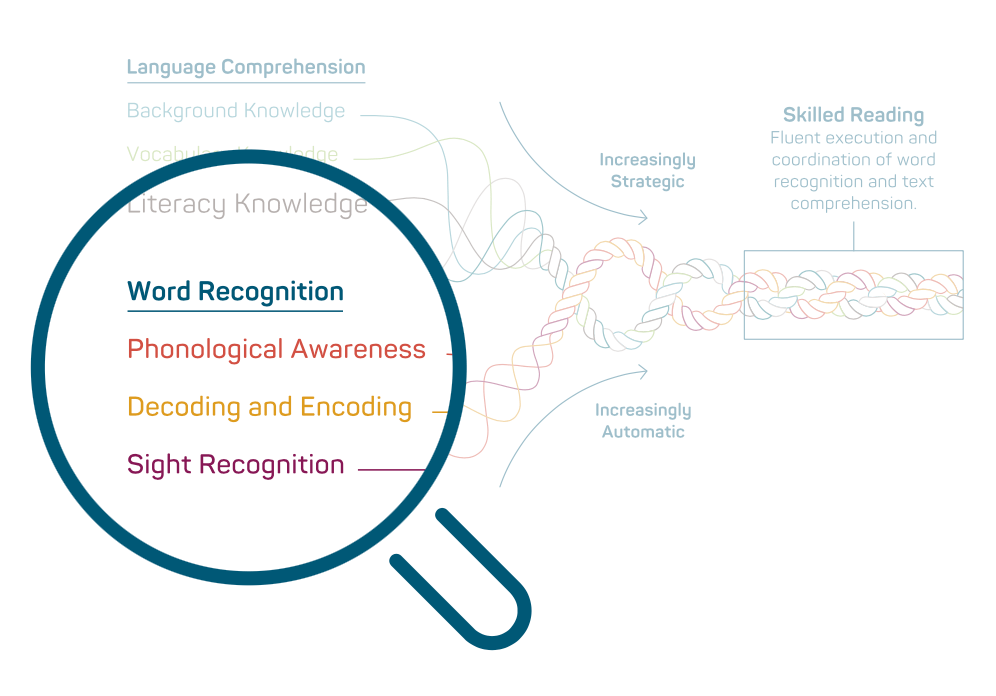
What are the characteristics of effective literacy instruction?
How do we apply the principals of the Science of Reading into our literacy instruction at Little Panthers Preschool
At Little Panther’s Preschool, we prioritize effective early literacy instruction to establish a solid foundation for success. Research shows that children who are proficient readers in Kindergarten experience long-term benefits, such as higher educational attainment, increased earnings, and residing in more prosperous communities. To ensure our students’ success, we have meticulously reviewed the science of reading and diligently crafted a comprehensive curriculum. Our literacy program encompasses phonics, phonological awareness, and comprehension, equipping children with the essential skills to excel in literacy.
Our pre-kindergarten program stands out from typical ones that follow a “letter of the week” approach. Instead, we have carefully designed our program to introduce letters and their sounds in a logical sequence. This enables children to start blending sounds as early as the fourth week of school, and then gradually enhance this skill with each new letter and sound they learn. By the end of the school year, they are able to read CVC words fluently. In parallel, we also focus on teaching one sight word per week, ensuring that students master Fry’s first 20 most common words. Our approach is rigorous and aims to provide children with a significant advantage as they embark on their educational journey.
A look inside the curriculum

Heggerty:
Heggerty “The Purple Book,” as it’s often called, uses nursery rhymes to introduce preschool students to language play. The lessons include eight phonological and phonemic awareness skills, taught in a systematic progression. The advanced skill of initial phoneme substitution is taught beginning in Week 19, after students have learned to isolate, blend, and segment with phonemes.
Through two early literacy skills, students also develop alphabet knowledge through daily practice with an alphabet song and letter name and sound practice. Nursery rhymes are taught each week so that by the end of preschool your students will begin to build a repertoire of classic nursery rhymes as they learn to enjoy language play!
The 10 components included in each Heggerty Pre-Kindergarten lesson:
- 8 phonemic awareness skills
- 1 letter name and letter sound recognition activity
- 1 language awareness activity using nursery rhymes
Daily lessons provide practice and exposure with 8 phonemic awareness skills:
- Rhyme
- Onset Fluency
- Phoneme Isolation (initial, final, and medial)
- Blend words, syllables, onset-rime, and phonemes
- Segment words, syllables, onset-rime, and phonemes
- Add words, syllables, and initial phonemes
- Delete words, syllables, and initial phonemes
- Substitute initial phonemes (Weeks 19-35 only)
Reading Horizons: A Highly Effective Phonics Curriculum
Reading Horizons is a research-based and highly effective phonics curriculum that utilizes a unique method to teach children how to read and spell words. Through this curriculum, children engage all their senses – hearing, writing, and reading words. As early as the fourth lesson, they begin learning to blend sounds, and within the first few weeks of instruction, they can decode words. Below is a sample of the yearly outline of instruction that your student will cover.

 Little Panthers Preschool